


Summary
Welcome to this week’s MP Market Review – your go-to source for insights and updates on the Canadian dividend growth companies we track on The List! While we’ve expanded our watchlists to include U.S. companies, The List-USA, our Canadian lineup remains the cornerstone of our coaching approach.
Don’t miss out on exclusive newsletters and premium content that will help you sharpen your investing strategy. Explore it all at magicpants.substack.com.
Your journey to dividend growth mastery starts here – let’s dive in!
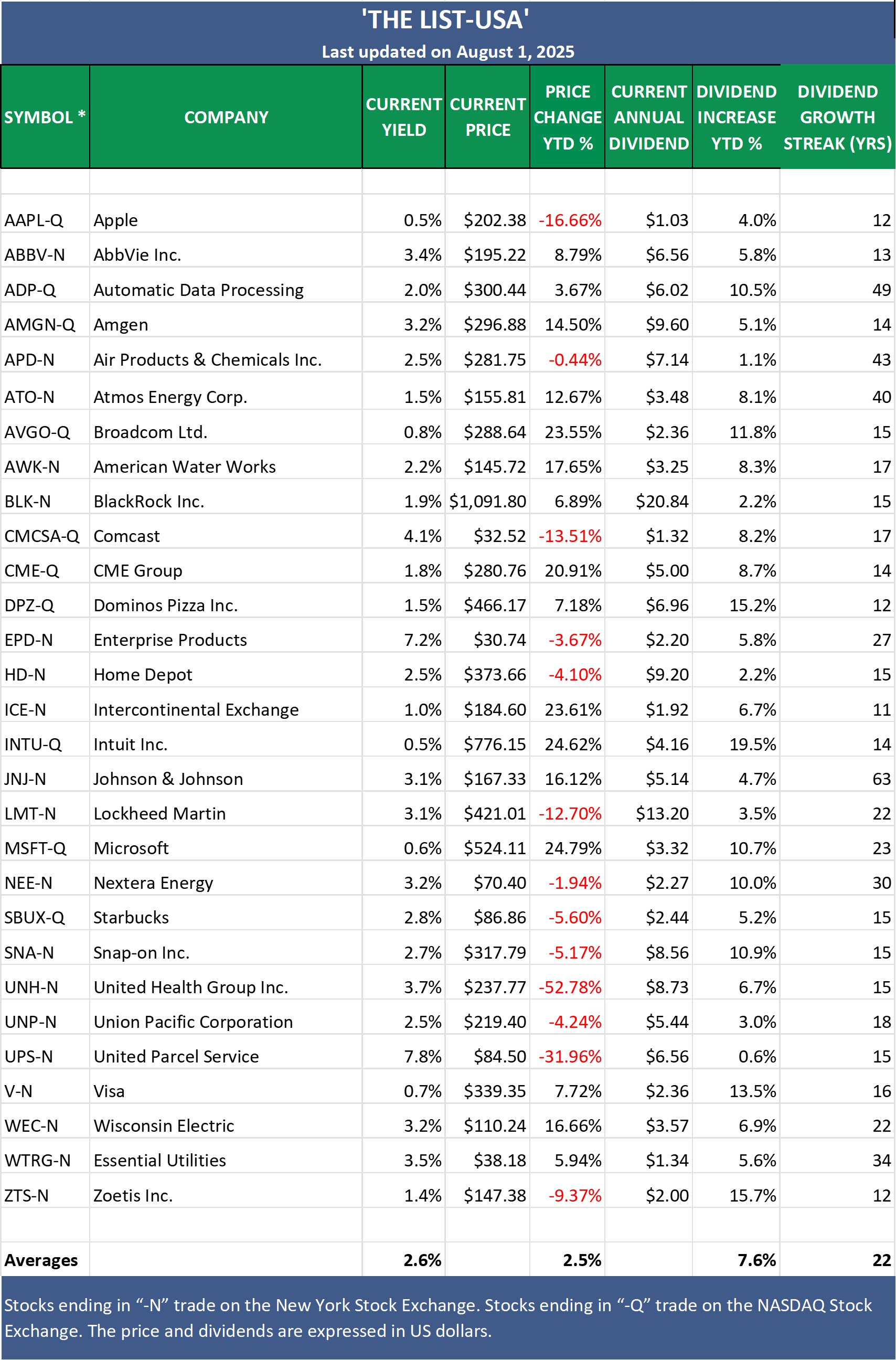
Below The List chart is our monthly U.S. watchlist, The List-USA.
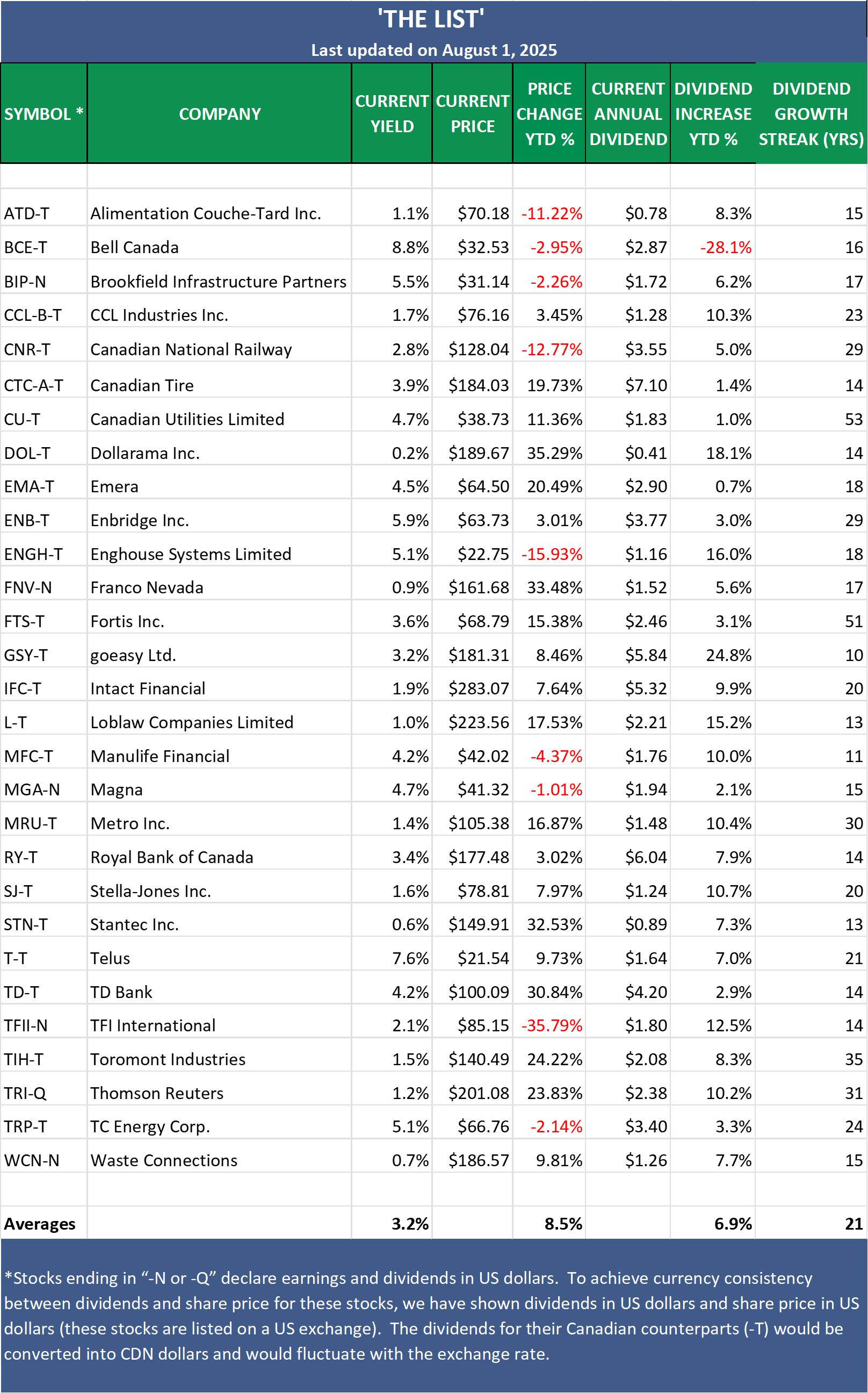
Last week, dividend growth of The List stayed the same with an average return of +6.9% YTD (income).
Last week, the price of The List was down from the previous week with an average return of +8.5% YTD (capital).
Last week, there were no dividend announcements from companies on The List.
Last week, there were ten earnings reports from companies on The List.
This week, seven companies from The List will report on earnings.
DGI Clipboard
“My life has been a product of compound interest. Nothing more. Nothing less. And nothing brilliant."
- Warren Buffett
Don’t try to time the market. Let your cash compound instead.
Intro
The first step in managing anything well is setting a clear goal. The second step is tracking your progress toward that goal. Most investors rely on annualized returns and benchmark comparisons to evaluate their performance. But beyond these basics, there is little consistency in how investors measure success.
Dividend growth investors track a different metric: Yield on Cost (YOC). This is calculated by taking the annual dividend income, dividing it by the original purchase price, and multiplying by 100. We refer to this as Growth Yield because it captures the essence of what makes dividend growth investing so powerful: growth over time.
Growth yield measures not just dividend yield but dividend growth as well. It reflects the impact of both the starting yield and the compounding effect of rising dividends. That is why some low-yielding stocks at the time of purchase can end up delivering far more income than higher-yielding alternatives, simply because they grow faster.
If your goal as a dividend growth investor is to build a rising stream of income, growth yield is one of the most effective ways to track your success.
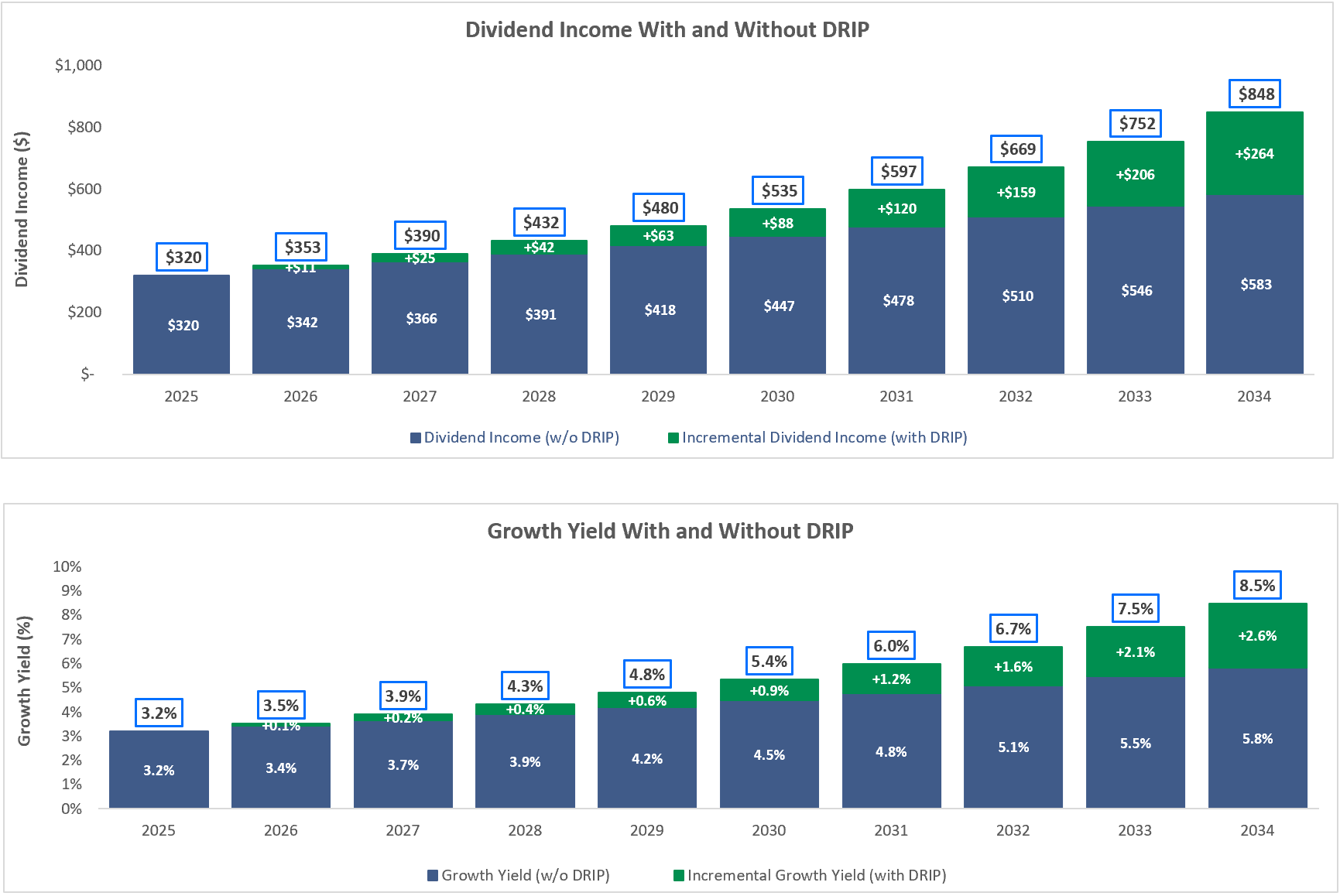
You can see the power of compounding clearly in the example below. Using last Friday’s closing prices, the average starting yield of the companies on The List is 3.2 percent. So far this year, the average dividend growth has been 6.9 percent. If you invested $10,000 across all stocks on the watchlist, here is what the income would look like over time:
With dividend reinvestment (DRIP), your annual income would grow to $848
Without DRIP, it would still grow to $583, just from dividends alone
That is before any capital appreciation is included.
Thanks to dividend growth, our initial 3.2 percent yield has risen to 5.8 percent. With reinvested dividends contributing an additional 2.6 percent, the total income yield reaches 8.5 percent. This is the compounding effect in action: steady, powerful, and predictable for those who stay the course.
Takeaway
If the objective of a dividend growth investor is to invest in securities with increasing income over time, the best metric to measure your success in achieving this objective is our growth yield metric, formerly known as yield on cost.
Become a paid partner, and I’ll show you exactly how I do it. With real money. In real stocks. In addition, gain full access to this post and exclusive, subscriber-only content. We do the work; you stay in control. Subscribe today and take your dividend growth investing to the next level!
DGI Scorecard
The List (2025)
The Magic Pants 2025 list includes 29 Canadian dividend growth stocks. Here are the criteria to be considered a candidate on The List:
Dividend growth streak: 10 years or more.
Market cap: Minimum one billion dollars.
Diversification: Limit of five companies per sector, preferably two per industry.
Cyclicality: Exclude REITs and pure-play energy companies due to high cyclicality.
Based on these criteria, companies are added or removed from The List annually on January 1. Prices and dividends are updated weekly.
The List is not a portfolio but a coaching tool that helps us think about ideas and risk manage our model portfolio. We own some but not all the companies on The List. In other words, we might want to buy these companies when valuation looks attractive.
Our newsletter provides readers with a comprehensive insight into the implementation and advantages of our dividend growth investing strategy. This evidence-based, unbiased approach empowers DIY investors to outperform both actively managed dividend funds and passively managed indexes and dividend ETFs over longer-term horizons.
Note: In the last week of every month, I will show the updated watchlist for our American dividend growers, The List-USA. It will be shown after the Canadian watchlist below.
Performance of 'The List'
Last week, dividend growth stayed the same, with an average return of +6.9% YTD (income).
The price of 'The List' was down from the previous week, with an average YTD return of +8.5% (capital).
Even though prices may fluctuate, the dependable growth in our income does not. Stay the course. You will be happy you did.
Last week's best performers on 'The List' were Toromont Industries (TIH-T), up +5.35%.; Enbridge Inc. (ENB-T), up +3.34%; and TC Energy Corp. (TRP-T) up +3.12%.
TFI International (TFII-N) was the worst performer last week, down -9.01%.
From breaking news to quarterly earnings reports, we break down the week’s biggest headlines to help you make sense of the market.
